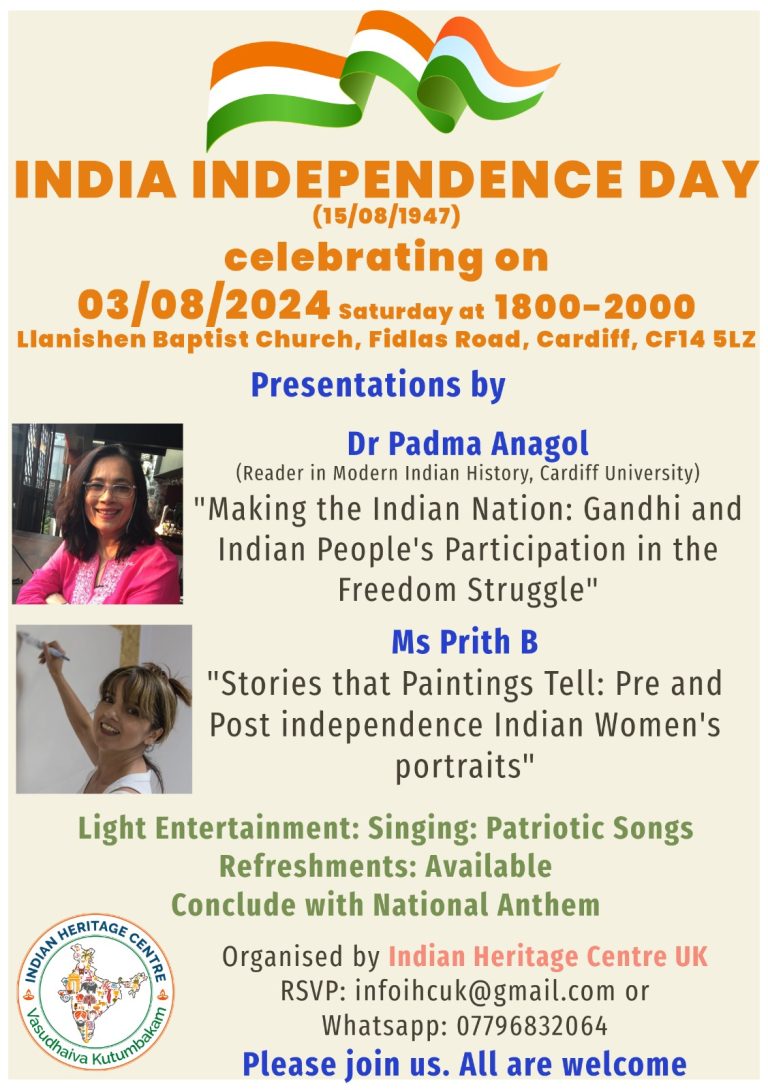
Last week I shared my work and gave a talk as part of Indian Independence Day celebrations here in Cardiff. It was a new audience for me, with many of the audience members knowing far more about the women than I had gleaned from the internet. Having said that, I was able to bring new stories of women to their awareness.
Ayah’s of London
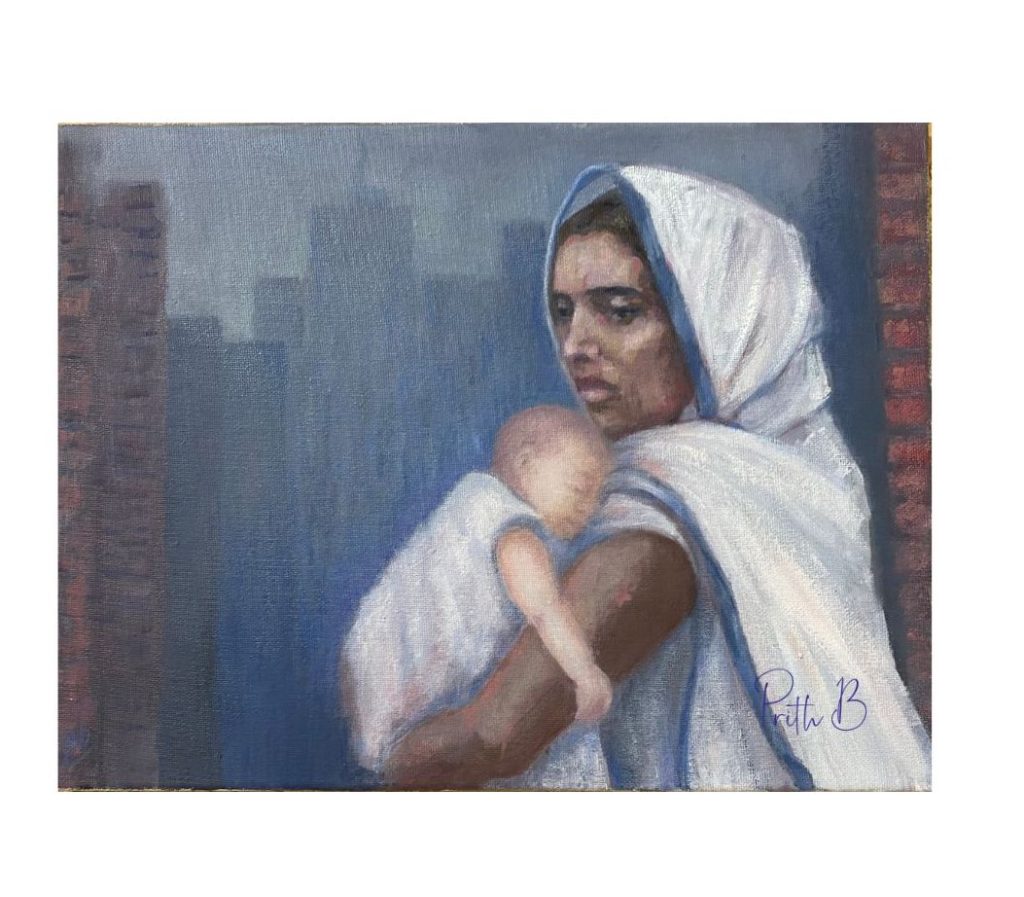
Very few of the audience knew about the nannies, known as the Ayah’s of London, that were left destitute in London during in the 1830’s, portrayed in the painting below.
They were Brough over in the early 1800’s by the British to look after their children, when they returned form India. After their services were no longer required they were left destitute in London, without money for their passage back to India to rejoin their own families they had left behind.
In 1825, Elizabeth Rogers opened a house for them to give them shelter. This later got taken over by a Christian organisation and turned into an ’employment agency’ allowing them to earn money. They were also encouraged to follow Christianity regardless of their own faith.
A very sad chapter in British history that was left untold until very recently. Read more here
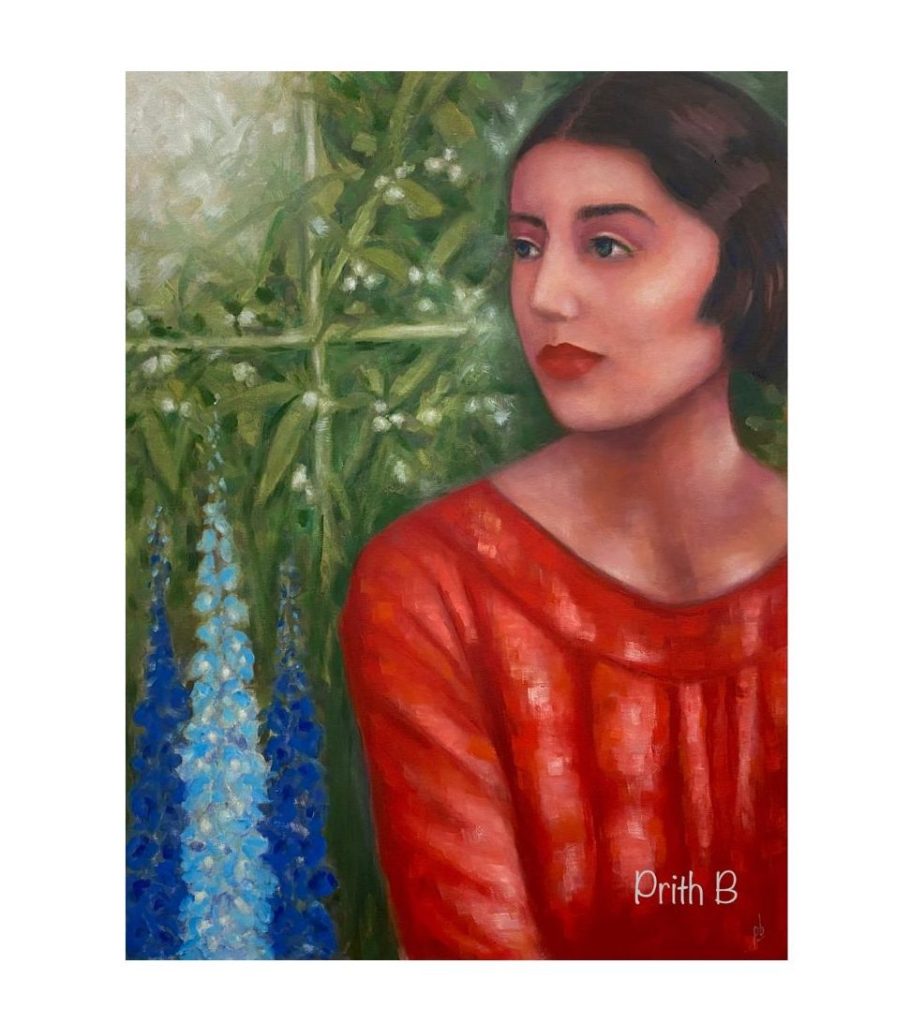
The Portrait of Dorothy Bonarjee
Dorothy Bonarjee came to Wales in 1914, studied at Aberystwyth and was the first woman of colour to win the Eisteddfod with her poetry.
She fell in love and was engaged to a Welsh student for 2 years. Unfortunately his mother was against the marriage saying ‘She’s beautiful, she’s intelligent but she’s Indian’.
Dorothy left heartbroken and went to London to study law. She eventually married an artist, a painter, and lived in the South of France.
She ended her days tending her own vineyard her father bought her when she divorced her husband. Read more here
The ‘Chipko Women’ of Northern India
One of the highlights of the event was meeting a couple who loved the ‘Chipko women’ painting of the eco-feminists in Northern India.
Their family still lived there and were part of the movement. They told me more about the village, why the trees were so important and showed me recent photos of their Mother in India dressed in that very distinctive style. They said it was a very important painting.
That was such a moment, it made me feel very proud of what I do. The time I spent on this piece was worth it just for them.

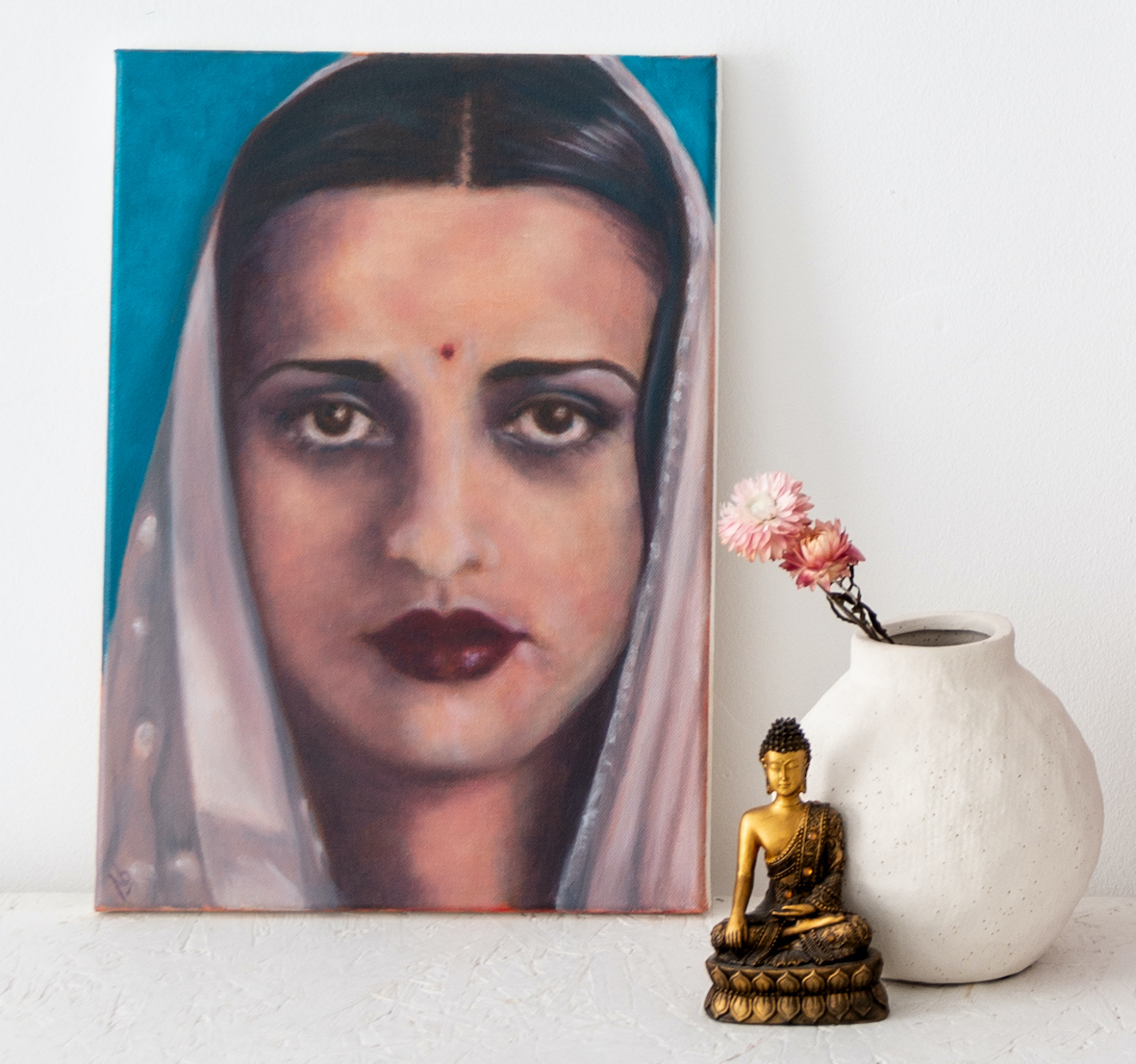
The other paintings I showed were portraits of the Indian artist Amrita Sher-Gil, the poet and activist Sarojini Naidu and political activist Kasturba Gandhi.
I will write separately about Amrita Sher-Gil as she is such an important figure in modern art, her work selling in 2023 for £7.4 million. She died aged just 26 in 1941.
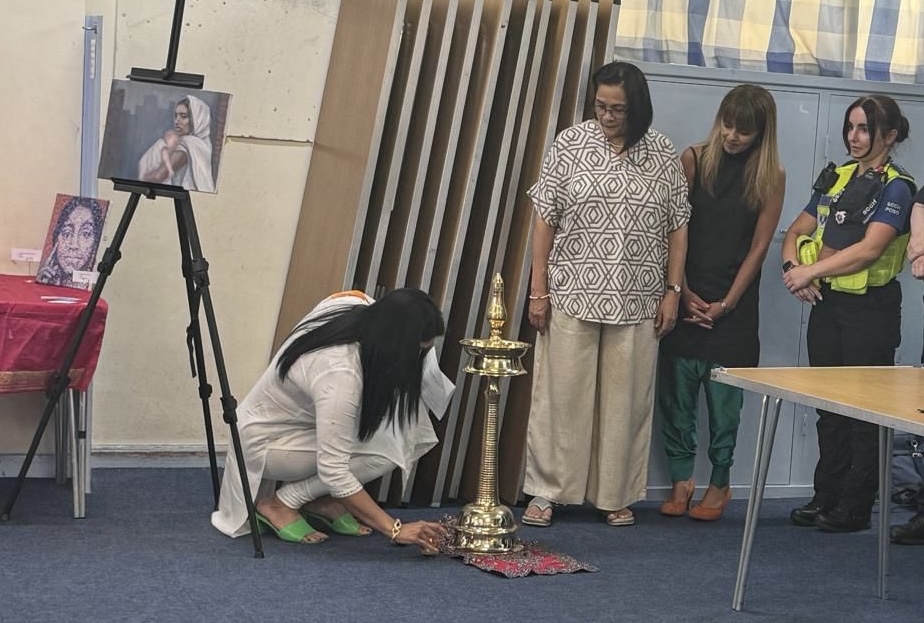
I was also asked to be part of the candle lighting ceremony at the beginning of the event which felt like a real honour.
Written August 18th 2024